Financial Education for Children: 12 Everyday Lessons That Work
Financial education starts in ordinary family life. These twelve age-appropriate moments make prices, saving and decisions understandable.
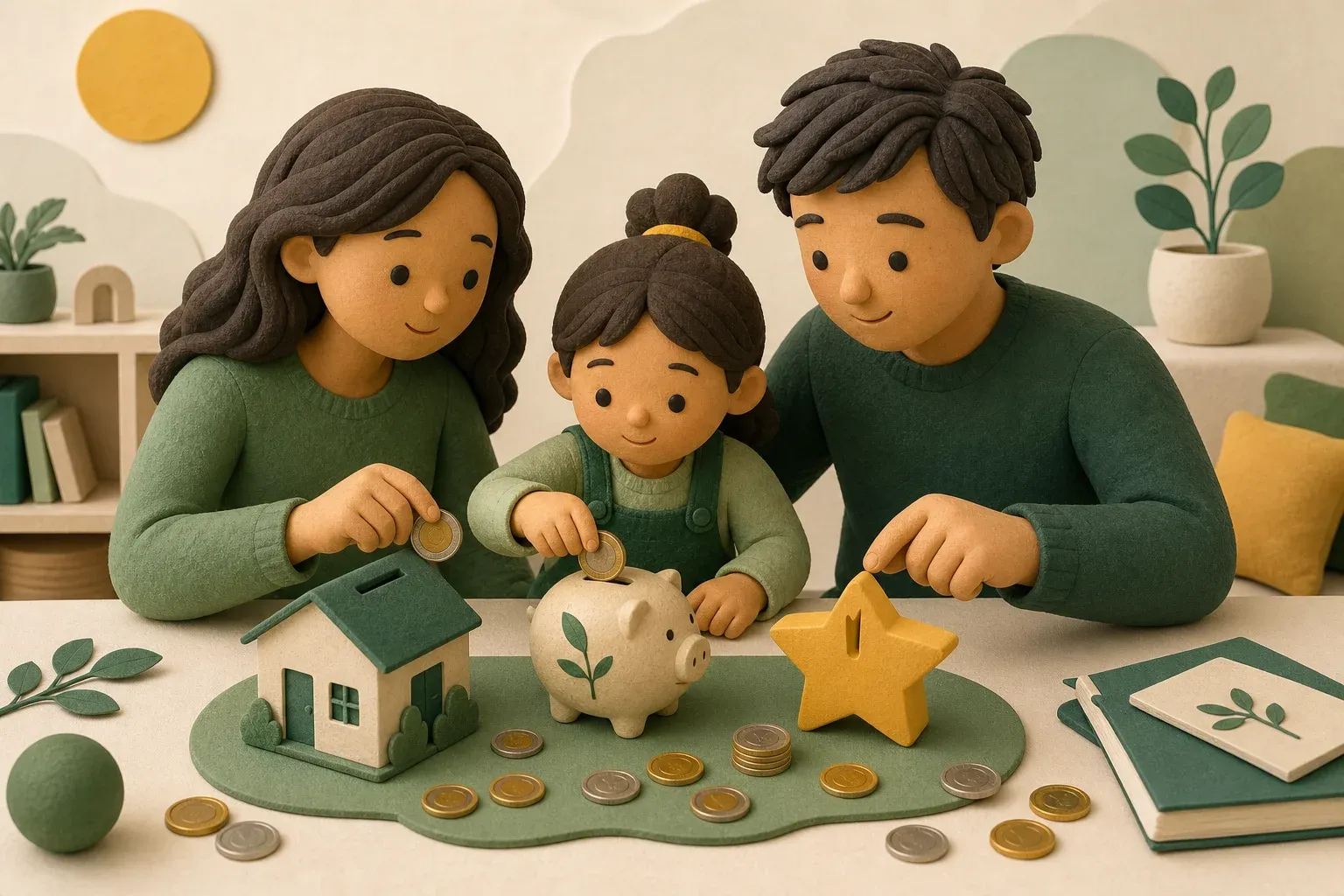
Quick answer: Financial education does not require a school-style lesson. Children learn when they can compare, choose, wait, save and reflect in safe everyday situations. Adults provide context and boundaries; children need genuine small decisions.
1. Compare prices in the supermarket
Choose two similar products and look at price, quantity and quality. Younger children can find the cheaper number; older children can compare unit prices. Explain that cheapest is not always best, but price is one part of a decision.
2. Plan one small purchase
Give the child a fixed amount for fruit, a picnic item or craft material. Let them examine alternatives and keep within the boundary. This turns “too expensive” into a concrete planning task.
3. Use regular pocket money
A fixed schedule creates repeated practice. Children experience that spending now changes what remains later. Use the current German Youth Institute guidance as orientation, then adapt it to your family.
4. Make saving visible
Use a transparent jar, a paper progress chart or a digital saving goal. Name the item and remaining amount. Visible progress makes waiting meaningful.
5. Discuss advertising
Ask what an advert promises and what information is missing. Influencer recommendations, countdowns and “limited” offers are useful examples of how attention and urgency can be designed.
6. Translate virtual currency
Before an in-game purchase, calculate the approximate price in euros and in weeks of pocket money. Make clear when a payment buys only a chance rather than a guaranteed item.
7. Read a receipt together
Find the individual prices, discounts and total. Older children can check whether the total matches an estimate. A receipt connects the products in the bag with the money spent.
8. Let a small mistake stand
If a safe purchase disappoints, avoid replacing it immediately. Ask what the child noticed and what they might check next time. Reflection builds judgement; embarrassment does not.
9. Plan a family activity
Offer a fixed leisure budget and two or three realistic options. Compare travel, entry and food costs. Adults keep responsibility for the household budget, while children practise prioritising one limited area.
10. Talk about different payment methods
Show that cash, card and mobile payment all use real purchasing power. The Deutsche Bundesbank highlights the educational value of tangible cash for children; digital records can complement that experience.
11. Explain recurring costs
Use a familiar subscription to show that a small monthly price repeats. Calculate its annual cost with an older child. This is particularly useful before a mobile plan or media subscription.
12. Review one month without judgement
Look at what came in, what was spent and what remains. Ask: Which decision felt good? What would you change? What is the next goal? Tallo’s transaction history can serve as a neutral memory aid without turning the review into surveillance.
Match responsibility to age
Preschool children need concrete objects and two simple choices. Primary-school children can manage small regular amounts. Teenagers can explore monthly budgets, contracts and digital security. Increase responsibility gradually and remain available when the stakes are larger.
Conclusion
Financial literacy grows through repeated, ordinary decisions. Invite children into suitable moments, explain what they cannot yet see and let safe consequences remain. Twelve short experiences across a year are more useful than one perfect lecture.